Assess carton inkjet printing on the board and printed surface your production actually uses. Define the identifier, presentation and readability requirement, then review the data and exception handling needed for each production run.
Speak directly with Oxford Traceability about direct inkjet coding on cartons.
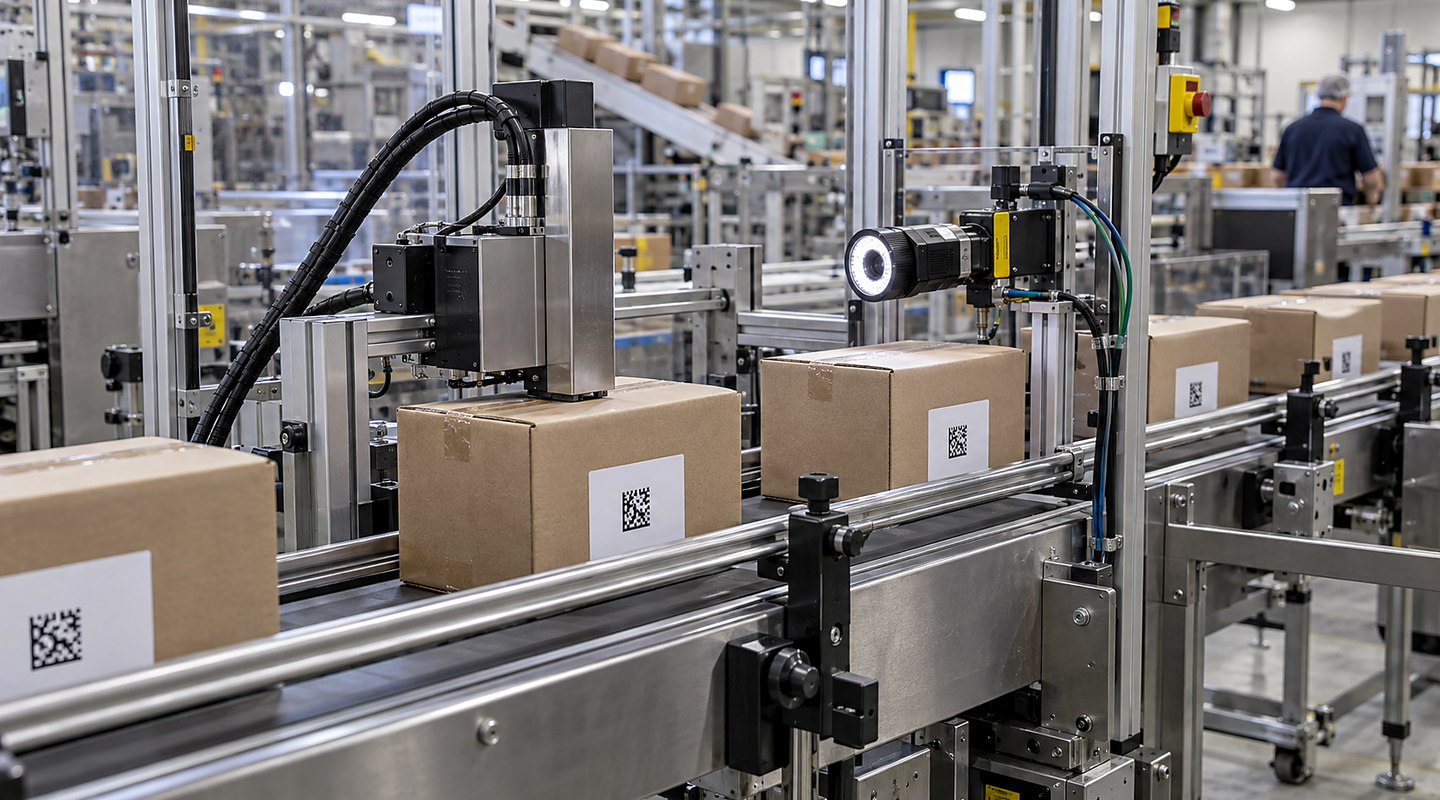
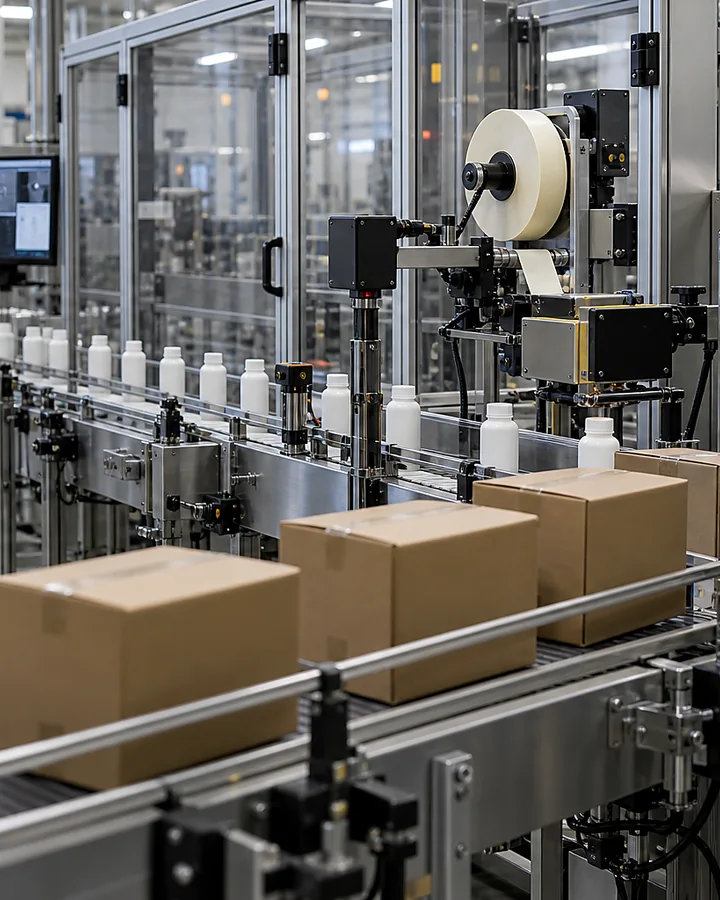
Photographs illustrate general industrial marking and labelling. Direct inkjet suitability depends on trials with the actual carton board, printed surface and message.
Quick answer
Which inkjet system can print our variable information on cartons?
Submit printed and unprinted board samples with the required text, barcode and code position. Include the conveyor speed and the distance available for printing and checking. Assess trial codes after normal handling, and agree how the printer receives job data and how incorrect or unreadable cartons are identified.
Choose carton coding from the board, message and line movement
Direct inkjet printing puts changing information onto the carton surface. The decision needs both a legible mark and the correct message on the correct case; those are separate checks in a production trial.
Test printed and unprinted board
Send the actual board grades, coatings and artwork areas. Include seams, folds and darker print where the code might fall. Judge the proposed ink and print position on production samples rather than assuming all cardboard behaves like the same plain brown test sheet.
Define the message before choosing the printer
Supply an approved example showing dates, batches, identifiers and any barcode. Record the source of every changing field and the rules for line breaks, date rollover and leading zeros. The longest permitted message is a useful test of space and readability.
Control carton-to-printhead presentation
Show conveyor direction, carton spacing and lateral movement at the proposed printing point. Identify how the carton is detected and how print position follows motion. Trial the narrowest and least stable cases, including acceleration or pauses that occur during normal production.
Readability and correctness need different tests
A scanner reading a barcode does not establish that the encoded batch is the intended batch. Check the printed result against the approved job data and use the specified barcode verification method where required. Include missing, wrong and partly printed codes in the challenge set.
Make the job change controlled
Agree who releases the next message and what confirms that it reached the printer. Include recipe selection, first-case approval and treatment of cases already on the conveyor. Plan the response to a lost network connection or unavailable source data before an operator needs it.
Assess durability after normal handling
Inspect the code after the expected rubbing, stacking and storage conditions. A freshly printed sample alone does not show how the mark will reach the customer. Record the sample board, ink, settings, handling sequence and acceptance result so later material changes can be reviewed.
Two useful starting points for carton inkjet printing
The right choice changes with identifier and data rules for direct inkjet coding on cartons, substrate, label or tag behaviour, your line layout and required results.
Carry the application decisions into a documented review and an agreed test or inspection plan.
01
Approve sample messages
Confirm the longest text, barcode content, positions and data owners.
02
Print real case materials
Use production board variants and representative conveyor presentation.
03
Verify job and fault handling
Test message changes, missing codes, unreadable results and interrupted communications.
04
Retain the approved combination
Record substrate, message, settings and the verification method used for release.
Important limits
Know what needs a separate check
Mark, label, tag and reader performance depends on the real substrate and environment.
A readable code does not prove that its encoded data is correct or reconciled.
Retention, privacy and regulatory rules must be defined by the responsible organisation.
Your final solution for direct inkjet coding on cartons must reflect the law, current standards and site-specific risks that apply to your installation.